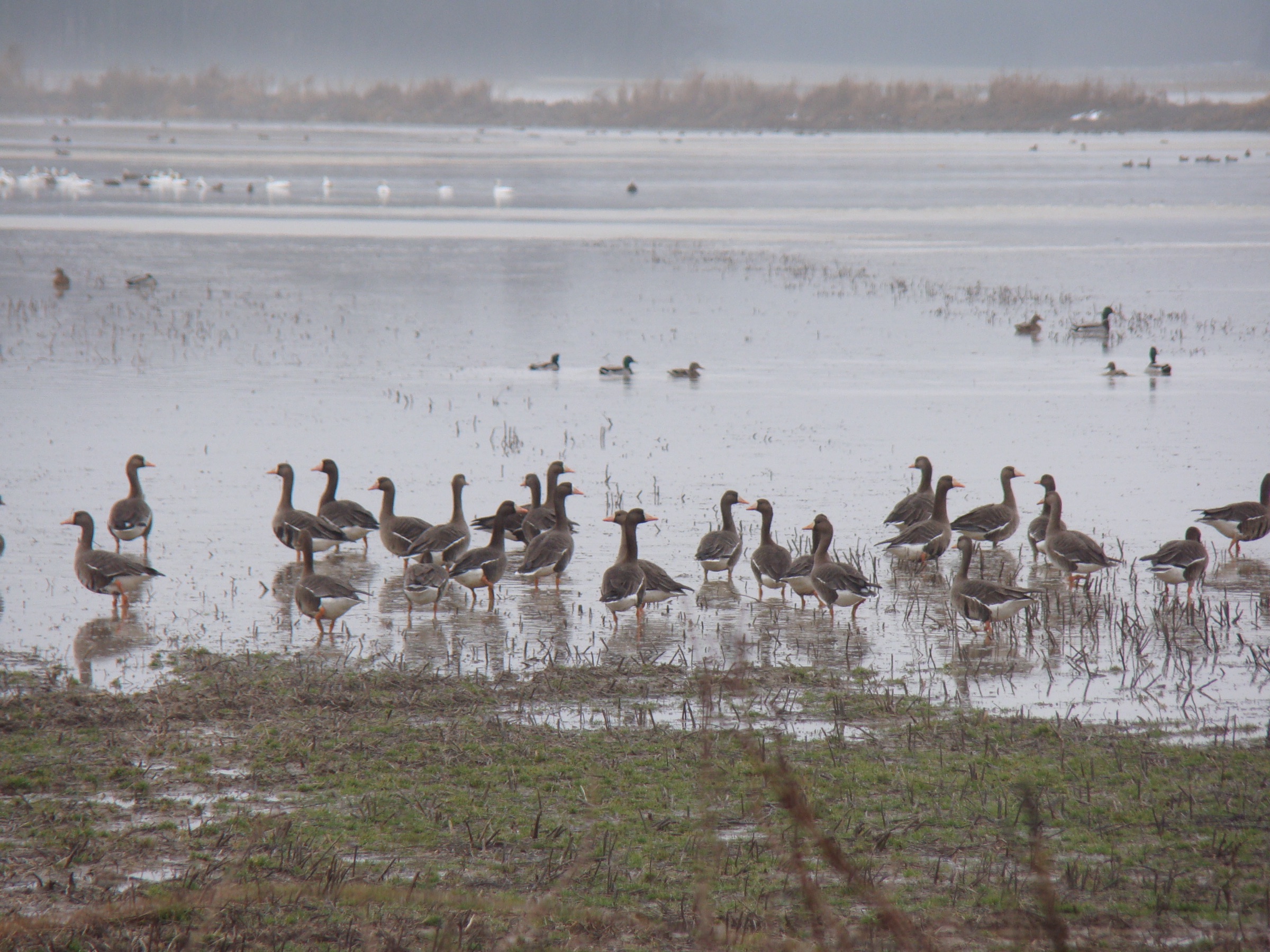
Greater white-fronted geese on a flooded unit at Chickasaw National Wildlife Refuge, next door to John Tully. Photo: USFWS, public domain.
Working Together for Waterfowl
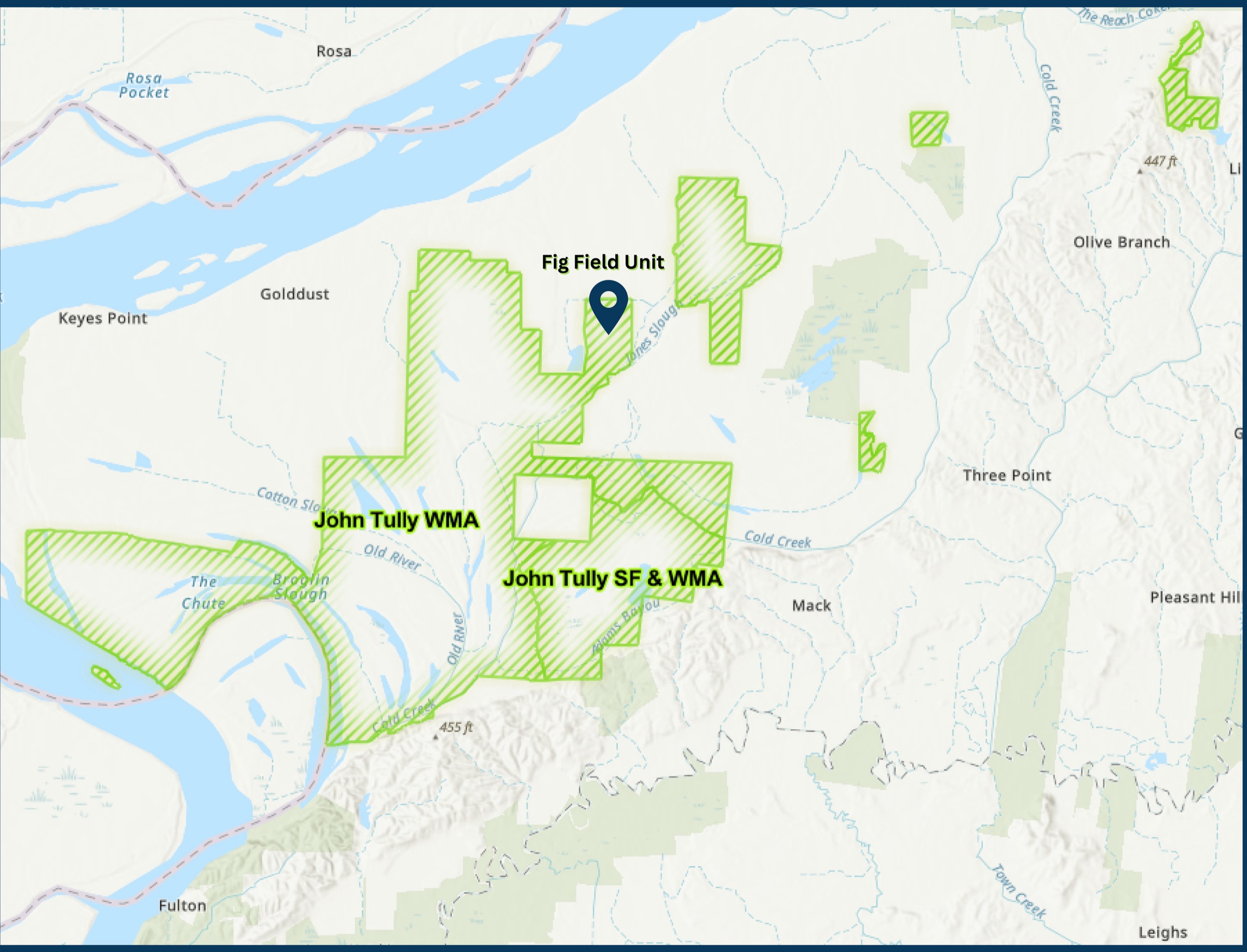
Delta Waterfowl and TWRA are rebuilding water delivery to the Fig Field Unit at John Tully Wildlife Management Area, fifty miles up the river from Memphis, and expect it to be complete by this duck season.
Delta Waterfowl does not stop at the prairie. At John Tully Wildlife Management Area in Lauderdale County, Tennessee, near where the Hatchie meets the Mississippi, Delta and the Tennessee Wildlife Resources Agency are working on the same problem the chapter talks about every September: getting water where the ducks need it, when the ducks need it.
Right now, water for the Fig Field Unit is pumped from existing wells and has to travel roughly 2,500 feet through open ditches before it reaches the unit. It seeps away along the route, and it takes about two days to arrive. That is a long time to wait on a cold front.
The project installs piping and pumping infrastructure to carry water from those same wells straight to the Fig Field Unit. Once it is complete, the unit will lose less water, fill faster, and TWRA will be able to manage the wetland on purpose rather than on the schedule the ditch allows.
John Tully runs to 15,500 acres of bottomland hardwood, swamp, sloughs and bayou, all of it public and much of it subject to Mississippi River flooding. Effective water management is what turns that ground into waterfowl habitat instead of just wet timber. This is the kind of work the Memphis banquet exists to fund: science-based solutions, on public land, in our own flyway.